Can Invisalign Correct Crowded Teeth Effectively?
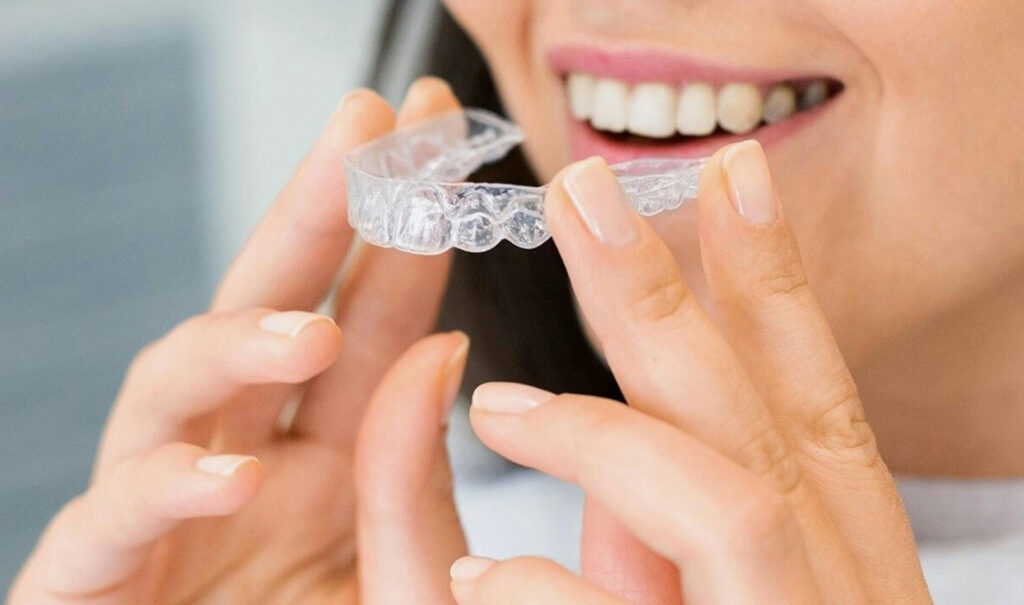
Crowded teeth are one of the most common reasons people ask about Invisalign. They look in the mirror, notice overlap, rotation, or a front tooth pushed forward, and wonder whether clear aligners can really handle the job or whether braces are still the safer bet. The short answer is yes, Invisalign can correct crowded teeth effectively in many cases. The more honest answer is that success depends on how severe the crowding is, where it sits in the arch, how the bite fits together, and how well the patient wears the aligners.
That distinction matters. Crowding is not a single problem with a single fix. A mild lower front overlap in an adult with a stable bite is very different from a teenager with narrow arches, blocked-out canines, and a deep overbite. Both may have “crowded teeth,” but the treatment planning is not remotely the same.
In practice, Invisalign performs best when the case is diagnosed properly, the digital plan is realistic, and the patient understands that aligners are active orthodontic appliances, not cosmetic trays. When those pieces line up, the results can be impressive. I have seen patients who assumed they were “too complicated” for clear aligners finish with well-aligned teeth and a bite that functions better than it did before treatment started. I have also seen cases stall because the crowding was underestimated, the trays were not worn enough, or the treatment goals were more ambitious than the biology allowed.
What crowding really means
Crowding happens when there is not enough room in the dental arch for the teeth to line up properly. That lack of space can show up in different ways. Teeth may overlap slightly, twist in place, erupt behind neighboring teeth, or get displaced out toward the lips or inward toward the tongue. Sometimes the problem is obvious only in the front. Sometimes the front crowding is just the visible sign of a broader issue involving arch shape, jaw relationships, or bite collapse.
A useful way to think about crowding is as a space problem. Orthodontic treatment creates or manages space by moving teeth into more efficient positions. That can involve expanding the arch within safe limits, slightly reducing enamel between selected teeth, moving molars back when anatomy allows, uprighting tilted teeth, or in some cases extracting teeth. Invisalign can participate in all of those strategies except the biology itself still sets the limits. Clear aligners are a delivery system for planned tooth movement, not a magic workaround for an impossible case.
Mild crowding often responds very well because only a small amount of space is needed. Moderate crowding can also be highly treatable, especially if the bite is favorable and the patient is compliant. Severe crowding is where skill, planning, attachments, and sometimes supplemental techniques become much more important. It is also where a specialist may recommend braces, extractions, or a hybrid approach instead.
Why Invisalign works for many crowded cases
Invisalign moves teeth through a sequence of custom aligners, each designed to make small changes from the last. Pressure is applied in a controlled way, and the teeth gradually shift through bone as the periodontal ligament remodels. If you strip away the marketing, that is the real principle. The aligner is simply the appliance that carries out the plan.
For crowded teeth, Invisalign has several genuine advantages. First, digital planning allows the clinician to visualize how much space is needed and where it can come from. Second, aligners cover the full arch, which can help coordinate tooth movements rather than pushing one tooth at a time in isolation. Third, adults tend to like them because they are discreet and easier to remove for meals and brushing. That last point matters more than people think. Better oral hygiene during orthodontic treatment often means healthier gums, and healthier gums support more predictable tooth movement.
There is also a psychological benefit. Patients who would never agree to metal braces often accept Invisalign. That increases the chance they will seek treatment at all, which is not trivial. A treatment option only helps if the patient will actually do it.
Still, “works” should not be confused with “works on everything.” Aligners excel at many forms of crowding, especially when the movements are well staged. They can derotate moderately twisted teeth, level mild to moderate overlap, and align arches with impressive precision. Where they become more demanding is in cases that require major root movement, substantial bite correction, difficult extrusions, or very large space creation. Those cases may still be possible with Invisalign, but they are less forgiving.
The severity of crowding changes everything
When a patient asks whether Invisalign can fix their crowded teeth, one of the first questions is how much crowding exists in millimeters. Exact numbers require records and measurements, but the concept is simple. If the arch is short by a couple of millimeters, that is a very different challenge from being short by 8 or 10 millimeters.
Mild crowding may be resolved with arch coordination, slight expansion within biologic limits, and small amounts of interproximal reduction, which is the controlled polishing of tiny amounts of enamel between teeth. Many people are surprised by how small these reductions are. Sometimes the total enamel reduction across several contacts is only about the width of a fingernail clipping, yet it can create enough room to uncross front teeth cleanly.
Moderate crowding usually requires more thoughtful sequencing. Rotated teeth need attachments to improve grip. The clinician may stage movement so one tooth moves out of the way before the next one comes forward. Refinements are common. That is not a sign of failure. It is part of responsible treatment.
Severe crowding can still sometimes be treated with Invisalign, but it is where expectations must become sharper. A canine that is fully blocked out high in the arch, for example, may be difficult to track with aligners alone. A lower incisor crowded behind the others may look simple to the patient but prove stubborn if the roots need significant repositioning. In these cases, the question is not just “Can it be done?” but “Can it be done predictably, efficiently, and with a healthy final bite?”
That is often where an orthodontist’s judgment makes the difference.
The hidden factors most patients do not see
Crowding is visible. The reasons behind it often are not. A dentist or orthodontist evaluating Invisalign for crowding is not just looking at crooked teeth. They are also looking at gum health, bone support, tooth size, root positions, bite depth, jaw relationships, wear patterns, missing teeth, restorations, and habits like clenching or tongue thrust.
Take deep bite as an example. A patient may have crowded upper and lower front teeth, but the real challenge is that the upper front teeth excessively cover the lowers. If you align the crowding without addressing the deep bite, the front teeth may interfere and prevent stable correction. Aligners can help open the bite in many cases, but the plan must be built around that goal from the start.
Or consider periodontal concerns. Adults with crowding often also have gum recession or reduced bone support, especially on the lower front teeth. Those teeth can be aligned, but the movement has to respect the supporting tissues. Overexpanding or pushing roots outside the bone housing may create problems. Sometimes the smartest plan is a more conservative alignment rather than a perfectly broad arch that looks ideal on a screen but ignores anatomy.
This is why crowded teeth should not be judged from selfies alone. The front view almost never tells the whole story.
What Invisalign can usually handle well
There are patterns of crowding that tend to respond especially well to Invisalign when the treatment is properly managed.
- Mild to moderate front tooth overlap, especially in adults with healthy gums
- Rotations and alignment issues where enough space can be created conservatively
- Relapse after previous braces, such as lower front crowding that returned over time
- Cases needing modest expansion and bite coordination rather than major skeletal change
- Patients who are disciplined enough to wear aligners 20 to 22 hours a day
That last point belongs on the same level as tooth mechanics. Compliance is not a side issue. Invisalign does not work because the trays exist. It works because the trays are worn consistently enough to deliver the planned forces.
Where Invisalign may be less ideal
There are crowded cases where braces remain the more efficient or more predictable tool. Fully blocked-out teeth, severe root angulations, extraction cases requiring heavy control of space closure, and complex bite discrepancies can push aligners closer to their limits. Some of those cases are still treated with Invisalign successfully by experienced orthodontists, often with auxiliaries such as buttons, elastics, or temporary anchorage devices. But success becomes more technique-sensitive.
A practical example helps. Imagine a patient with severe lower crowding, a deep overbite, and a narrow arch. The front teeth look like the main problem, but aligning them requires room, bite opening, and root control. Invisalign might still be part of the solution, yet braces could offer more direct control and shorten treatment. If the patient insists on clear aligners, the doctor may need to explain that the process could involve more refinements, attachments on many teeth, and a longer timeline than expected.
This is not a weakness of Invisalign so much as a reminder that every appliance has strengths and trade-offs.
Treatment planning matters more than the brand name
Patients often focus on the product. Clinicians focus on the plan. That difference is worth remembering.
A good Invisalign result in crowded teeth usually depends on several small decisions made well. How much expansion is truly safe? Which teeth should move first? How much enamel reduction is appropriate, if any? Are attachments needed to control rotations? Should the bite be opened early or later? Is there enough overjet to allow alignment without collisions between upper and lower front teeth? Will retainers need to be passive or slightly active afterward?
None of those decisions is glamorous. All of them affect the outcome.
I have seen crowded lower incisors that looked simple but were treated too aggressively, leaving them aligned yet unstable and prone to relapse. I have also seen cases where patients were told extractions were unavoidable, only for a second opinion to show that conservative space management with aligners and minor interproximal reduction could solve the issue without removing teeth. The point is not that one method is always better. The point is that planning drives the result.
The role of attachments, enamel reduction, and refinements
One reason people underestimate Invisalign is that they imagine it as a set of smooth transparent shells doing all the work on their own. In reality, many crowded cases require attachments, which are small tooth-colored bumps bonded to teeth so the aligners can grip and direct movement more effectively. These are especially useful for rotating teeth or controlling roots.
Interproximal reduction is another tool that can make crowded cases work very well. The phrase can sound alarming, but in skilled hands it is conservative. Tiny amounts of enamel are polished between selected teeth to gain fractions of a millimeter at multiple contact points. Spread over several teeth, that can create meaningful room while preserving natural proportions and avoiding more invasive options.
Refinements are also common. A patient may start with 20 to 30 aligners and then need another short series after a rescan. This is routine, particularly in moderate crowding. Teeth do not always track exactly as the digital setup predicted. Biology has a vote. Refinements allow the plan to catch up with real life.
Patients sometimes hear “refinement” and assume the original treatment failed. Usually it means the clinician is finishing carefully rather than accepting a nearly right result.
How long does it take?
For mild crowding, treatment may be completed in as little as six to nine months. Moderate cases often land somewhere around 12 to 18 months. More complex crowding can take 18 to 24 months or longer, especially if bite correction, extractions, elastics, or multiple refinement phases are involved.
These are broad ranges, not guarantees. Wear time changes everything. A patient who wears aligners 22 hours a day and changes them on schedule may move along efficiently. Another patient with the same crowding who removes them often, forgets trays, or delays changes can add months.
Age also matters, though not in the way many people expect. Adults can absolutely be treated successfully with Invisalign. The challenge is not that adult teeth cannot move. They can. The challenge is that adults may have restorations, recession, bone loss, missing teeth, or old dental work that complicates mechanics. A healthy, motivated 38-year-old with mild crowding can be an excellent Invisalign candidate. So can a 58-year-old, if the supporting tissues are stable and the goals are realistic.
Will the results last?
Yes, if retention is taken seriously. No, if it is treated as optional.
Crowding, especially lower front crowding, has a long history of relapse. Teeth are influenced by soft tissue pressure, bite forces, age-related changes, and natural settling. That is true whether correction was done with braces or Invisalign. Retainers are the insurance policy against all that drift.
Most patients finishing Invisalign for crowded teeth will be advised to wear retainers nightly long term. Some doctors recommend full-time retainer wear for a period first, then night wear. In selected cases, a bonded fixed retainer behind the front teeth may be suggested, sometimes combined with a removable retainer. The exact plan depends on the original problem, the final bite, and the patient’s habits.
This is one of the most common avoidable disappointments in orthodontics. People invest months in correcting crowding, feel relieved when treatment ends, then become casual about retention. A year later, the lower front teeth begin to overlap again. The movement may start small, but once it starts, it rarely reverses https://lorenzotgtu326.brightsora.com/posts/invisalign-treatment-timeline-from-scan-to-smile on its own.
Questions worth asking before starting
If you are considering Invisalign for crowded teeth, the most useful consultation is not the one that simply confirms you are a candidate. It is the one that explains the logic of the plan. Ask how much crowding exists, where the space will come from, whether interproximal reduction is expected, whether attachments will be visible, what the bite issues are beyond the crowding, how many refinement rounds are typical in similar cases, and what retention will look like afterward.
A good consultation should leave you with a clearer picture, not just a price and a promise.
Here are a few questions that tend to separate a rushed consult from a thoughtful one:
- Is my crowding mild, moderate, or severe, and what makes you classify it that way?
- Will the treatment rely on expansion, enamel reduction, extractions, or a combination?
- Are there bite issues that need correction along with alignment?
- If my teeth do not track perfectly, what is the plan for refinements?
- Would braces offer any significant advantage in my specific case?
Those questions are not confrontational. They are practical. The answers often reveal whether the proposed treatment is tailored to your mouth or borrowed from a generic template.
Invisalign versus braces for crowded teeth
This comparison gets oversimplified. Braces are not automatically better for crowding, and Invisalign is not automatically more comfortable or faster. The better choice depends on the mechanics required and the patient sitting in the chair.
Braces offer continuous control because they stay on the teeth full time and allow direct adjustments. They can be especially efficient for difficult rotations, significant vertical problems, blocked-out teeth, and extraction space closure. They are less dependent on patient discipline, though hygiene tends to be harder.
Invisalign offers aesthetics, removability, easier brushing and flossing, and often a more appealing day-to-day experience. For many mild to moderate crowded cases, it can match braces very well. In some adults, it may even feel more manageable because there are no brackets to trap food or wires to irritate the cheeks.
Where patients sometimes get misled is the idea that aligners are “the same as braces, just invisible.” They are both orthodontic tools, but they do not behave identically. If your case sits near the edge of what aligners can do efficiently, braces may provide a cleaner path. That is not bad news. It is simply honest treatment selection.
Common misconceptions that deserve a reality check
One misconception is that if crowding looks minor from the front, the case must be easy. Not necessarily. A single overlapping incisor may be tied to a deep bite or a narrow arch that complicates correction.
Another is that Invisalign is only for cosmetic straightening. That used to be closer to the truth many years ago. It is far less true now. Modern aligner therapy can address a wide range of orthodontic issues, including many functional ones, when planned properly.
A third is that clear aligners are pain-free. They are often more comfortable than braces, but tooth movement still involves pressure, tightness, and adaptation, especially during the first few days of a new tray. Some trays feel almost effortless. Others remind you that real movement is happening.
Then there is the belief that every crowded case can be solved without extractions if the provider is skilled enough. Sometimes yes. Sometimes no. Extraction decisions should never be casual, but neither should they be rejected reflexively. In a small subset of severe crowding cases, extractions remain the healthiest and most stable option.
The real answer
Can Invisalign correct crowded teeth effectively? In many cases, absolutely. It can align mild to moderate crowding extremely well and can also manage a surprising number of more complex cases when handled by an experienced clinician. The keys are accurate diagnosis, realistic treatment planning, good biologic judgment, and patient compliance that is strong enough to support the mechanics.
The phrase “good candidate” matters here. If your crowding is straightforward, your gums are healthy, and your bite does not present major obstacles, Invisalign is often an excellent option. If your crowding is severe, your bite is complicated, or your teeth require difficult movements, Invisalign may still work, but it deserves a more nuanced conversation about efficiency, predictability, and alternatives.
The most effective treatment is rarely defined by what is trendiest or least visible. It is defined by what moves your teeth safely, fits your anatomy, respects your priorities, and leaves you with a result you can maintain for years. That is the standard worth aiming for, whether the appliance is clear plastic or metal brackets.
Omni Dental Specialty
Address: 1690 E Gonzales Rd, Oxnard, CA 93036
Phone number: +18053666000
FAQ About Invisalign
How much does Invisalign actually cost?
The out-of-pocket cost for Invisalign typically ranges between $3,000 and $8,000, with most patients paying a national average of roughly $5,100 to $5,700 before insurance.
What is the downside to Invisalign?
The biggest downsides to Invisalign are the intense discipline required to wear the trays 22 hours a day, the inconvenience of removing them to eat or drink, and the inability to fix severe, complex orthodontic issues.
Is $5000 a lot for Invisalign?
No, $5,000 is not considered a lot for Invisalign; it is exactly the national average. Treatment costs typically fall between $3,000 and $8,000, and $5,000 is the standard fee for a moderately complex case that takes 6 to 18 months to complete.